

History of Rangiora Art Society
Humble Beginnings
The origins of the Rangiora Art Society stretch back to the early 1900s, when a handful of art enthusiasts began gathering informally to paint together. These early gatherings, led by the likes of Barry Jones’ mother and others, were held without structure or formal membership. The creative impulse, however, was already deeply rooted in the community.
After a pause during World War II, the spirit of collective creativity was rekindled in 1959. That year marked the beginning of a more formal group, known then as the Rangiora Art Group. The first meetings were held in the home of founding member Agnes Koller, whose name would become synonymous with the group’s formation and growth.

Agnes Koller as known in later years

From Lounges to Halls
By the mid-1960s, the group’s membership had grown enough to require larger meeting spaces. The earliest surviving minutes record an AGM at Rangiora High School in 1967 with 14 people in attendance. From there, annual meetings moved to community venues like the War Memorial Hall and Anglican Parish Hall. These AGMs were more than administrative gatherings as they often featured guest speakers, art demonstrations, and lively conversation.
Guest presenters included respected artists such as Michael Harlow, Ron Mackie, George Genet, and Bill Sutton, whose talks and workshops helped shape the artistic understanding of members. These sessions explored techniques, history, and criticism such as palette knife painting to the "Golden Section" and art seen in galleries across Australia and Europe.
A Growing Creative Calendar
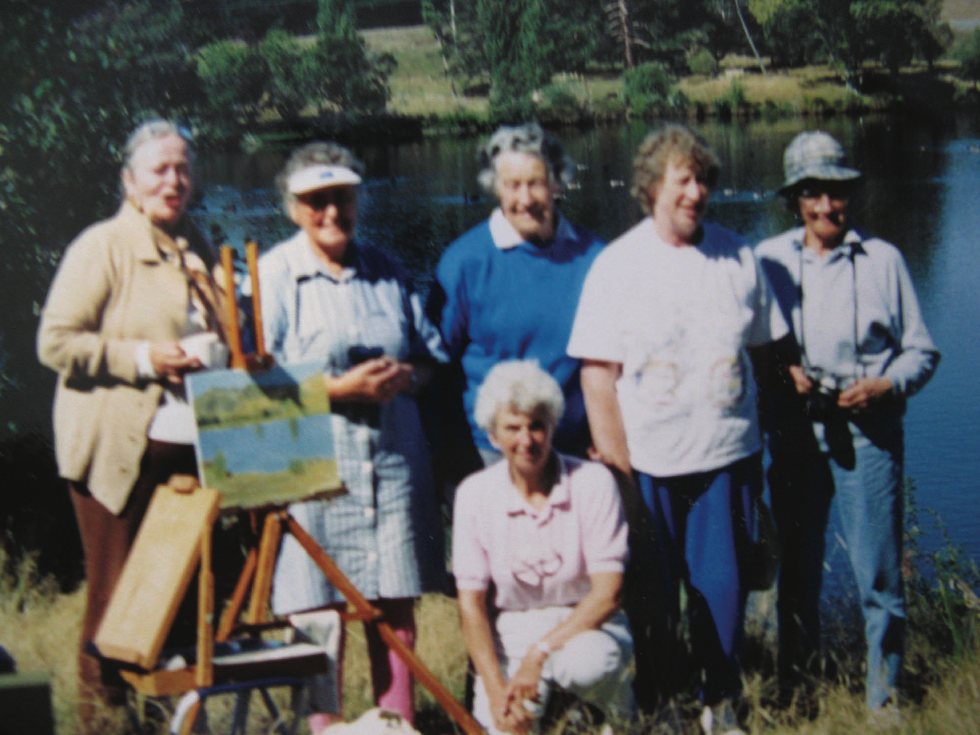
By the 1970s, the group’s calendar was full of creative opportunities. Regular outdoor painting days took artists to places like Cust, North Loburn, Amberley, and The Groynes, while indoor sessions at Rangiora High School offered still life studies, experimental techniques, and group critiques.
The group also began organising public exhibitions. The first major show was held at the Farmers Department Store in 1976, which was a successful venture that drew public attention and increased store foot traffic. In the years that followed, exhibitions became a staple of the Society's activity. Venues ranged from gardens and schools to galleries and retail spaces.

Garden Shows and Community Spirit
In the 1980s, the Society’s annual garden exhibitions at Agnes Koller’s property on Oxford Road became a beloved tradition. These shows were more that just about art, they were full community events. The group collaborated with potters, woodworkers, spinners, embroiderers, and other local creatives to put on exhibitions that attracted hundreds of visitors. Proceeds were often donated to community organisations, such as the St John Ambulance, local schools, and the Rangiora Library.
Tuition also became more formalised, with members enjoying workshops from respected artists and educators. During the winter months, the Society met at Rangiora High School, where more experienced members or guest tutors provided instruction and mentorship. These sessions were particularly valuable for beginners, helping them grow their skills and confidence.
Into the 1990s and Beyond
As the Society evolved, so did its ambitions. Indoor exhibitions, like those at the Gables Gallery and Chervier Centre, became more common. The Society also began offering prizes for student artists, hosting weekend painting retreats in Hanmer Springs and Purau Bay, and creating large-scale collaborative works, including a mural that was eventually installed in the Waimakariri District Council foyer.
The group continued to adapt and thrive, led by dedicated volunteers and shaped by an inclusive ethos. Members’ contributions were often recognised with honorary roles or gifts, such as rose bushes and commemorative artworks.

Joan Toshach was a long-serving president and active member through the 1980s and 90s.
Creative Foundations, Enduring Legacy
The Rangiora Art Society has always been more than just a painting group. It has served as a support network, a learning hub, and a bridge between artists and their wider community. While much has changed in the world around us, the heart of the Society remains the same: a shared belief in the value of art, the importance of community, and the joy of making something meaningful together.